Back
work about playground resume

Optimizing the Request-For-Quote Module

Internship | Xometry
shipped

Role

Frontend Development
Intern

Tools

Javascript, React,
Node.js, Figma

Team

2 developers, 1 designer, 1 PM

Skills

User Flow
Design Translations
Software Development

Timeline

12 Weeks

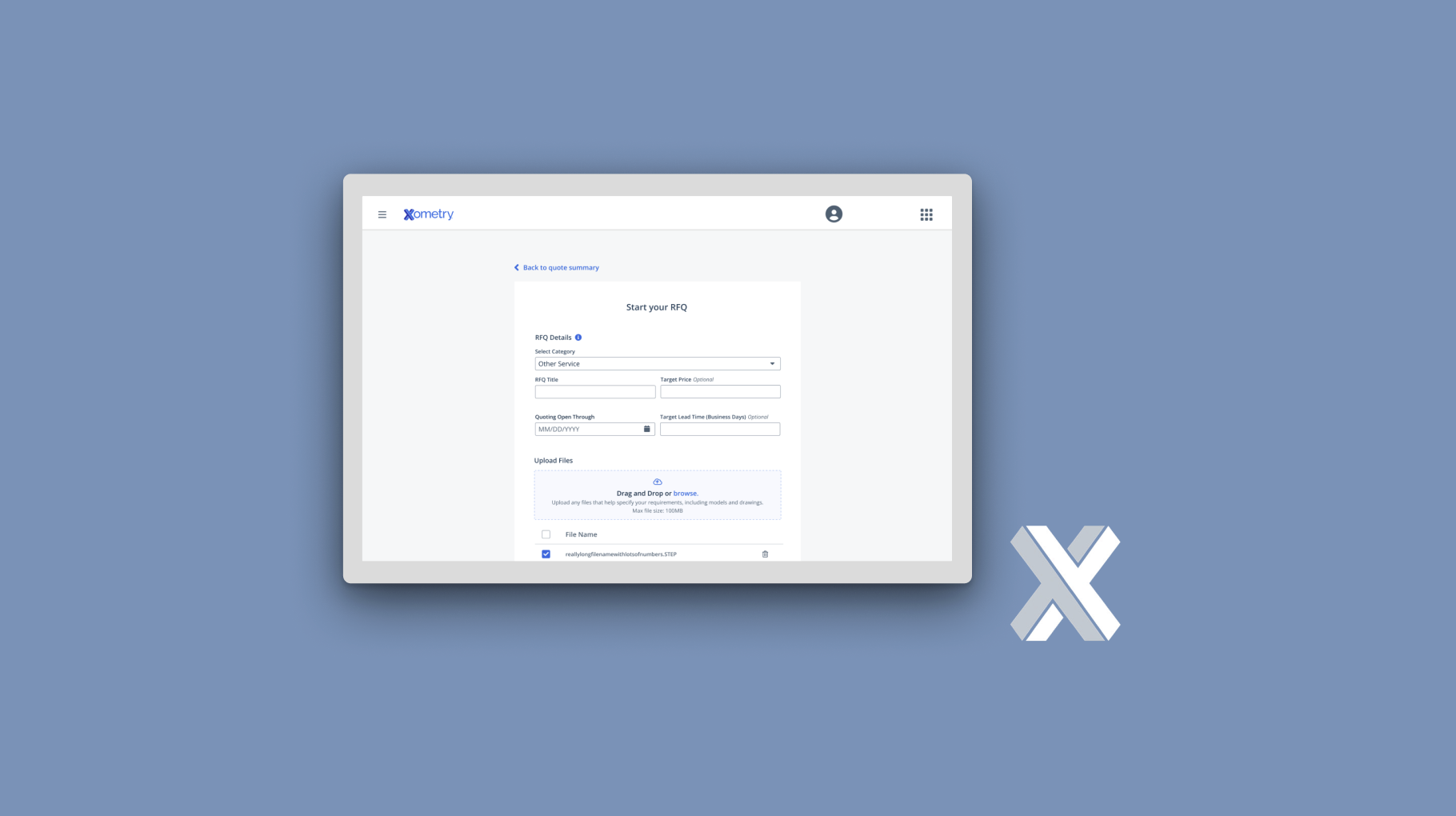
Xometry RFQ Process Interface

Overview

Streamlining the Request-For-Quote process and refactoring the codebase.

Xometry is an AI-powered marketplace that connects clients with partners to source manufactured parts and assemblies.

Our work focused on streamlining the Request-For-Quote process which consists of the Manual Quotes workflow. Through this, Xometry staff sends quote requests to manufacturing partners on behalf of clients and buyers which can optimize production.

As a frontend software developer, I worked along with other software development interns, a senior software engineer, a product design intern, and a product manager. We communicated directly with product designers to work on design translations. We also refactored the frontend repository in order to unify code for reproducibility and scalability.
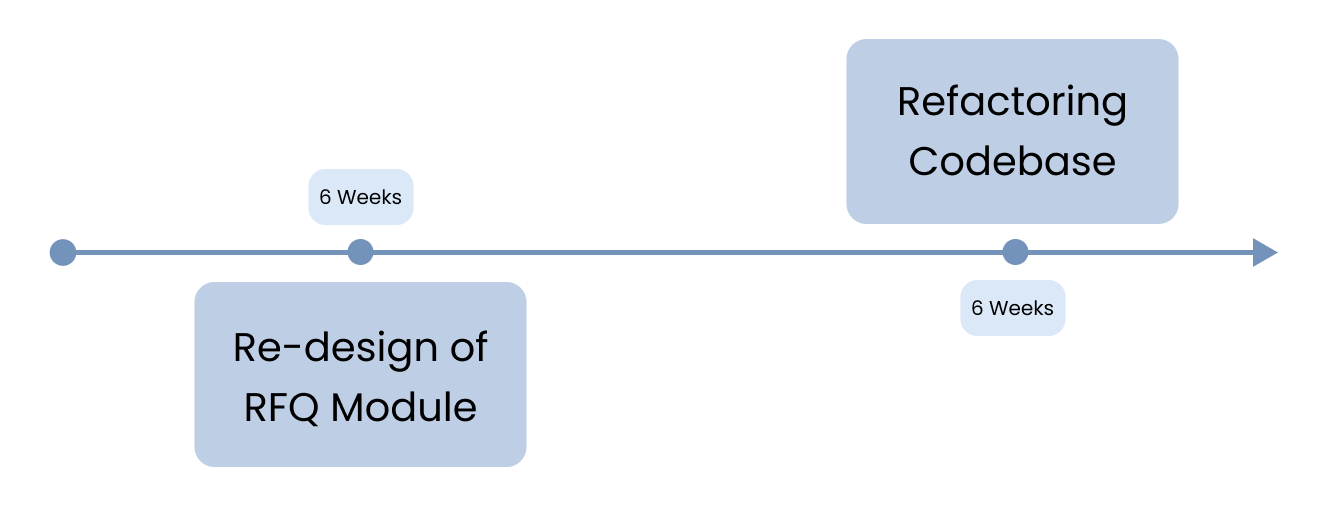
Project Timeline

Problem

Managing outdated forms and cluttered information created significant inefficiencies in the RFQ process for staff.

The existing RFQ system was originally designed for customer-facing interactions, but had evolved to serve primarily internal staff users. This fundamental mismatch created lots of pain points that significantly impacted staff productivity.

So we analyzed the workflow to understand the specific pain points staff faced daily.


The RFQ Process

How can we simplify the staff user experience for efficient quoting?

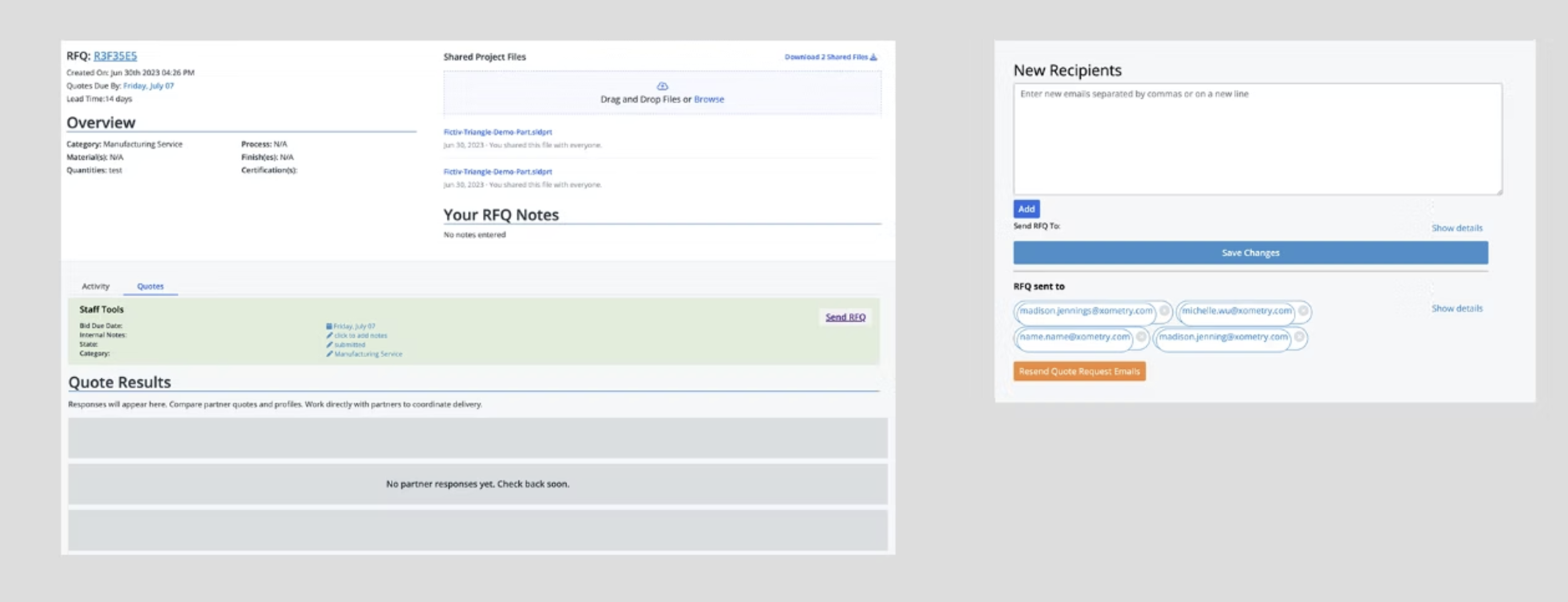
Since the tool was mainly used by Xometry staff, but was created as customer-facing, there were several features that needed to be re-evaluated. The RFQ form, Overview Page, and Partner Page was outdated and needed to be optimized for internal staff.

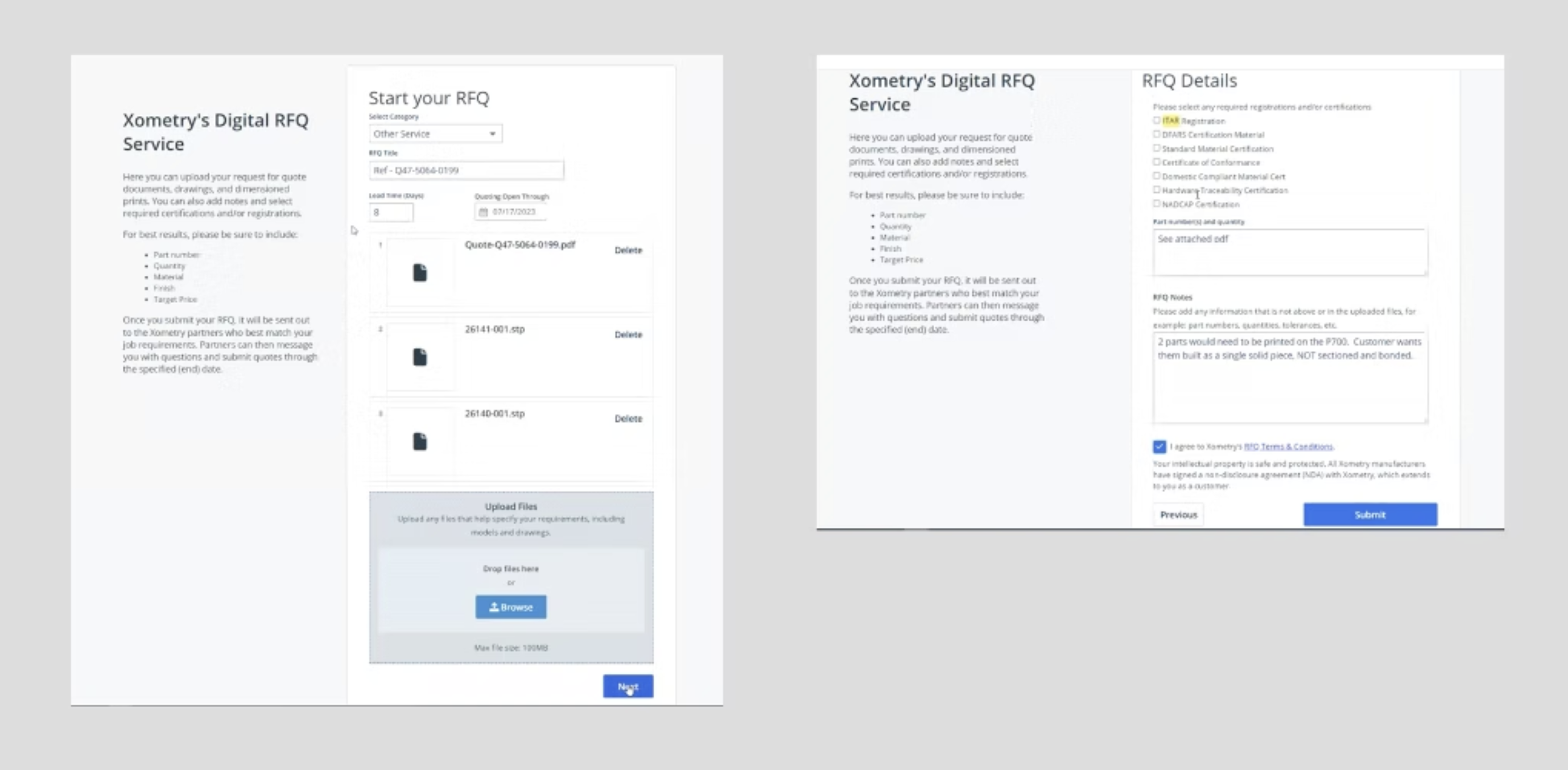
Old RFQ Form

Old RFQ Form showing outdated interface

Old RFQ Overview Page

Old RFQ Overview Page showing outdated interface

Translating Designs

We communicated with our product designers to evaluate feasibility and implement the final flows.

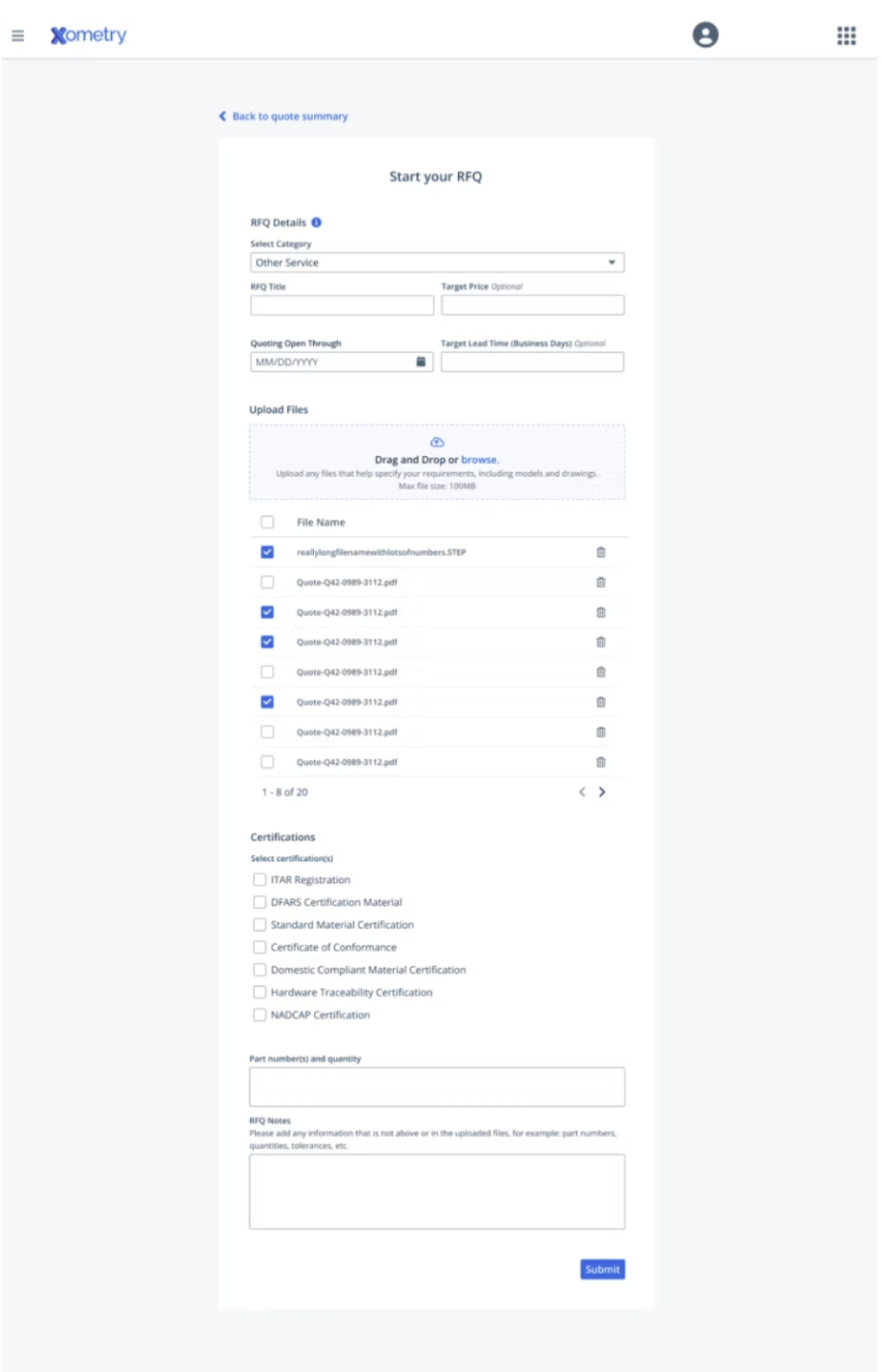
RFQ Form

The RFQ Form is more condensed and allows for staff to manually upload files.

The form is now one page in contrast to the original three pages.

We worked on the 'upload files' portion of the form to connect the frontend uploading to the backend file processing.

New RFQ Form design

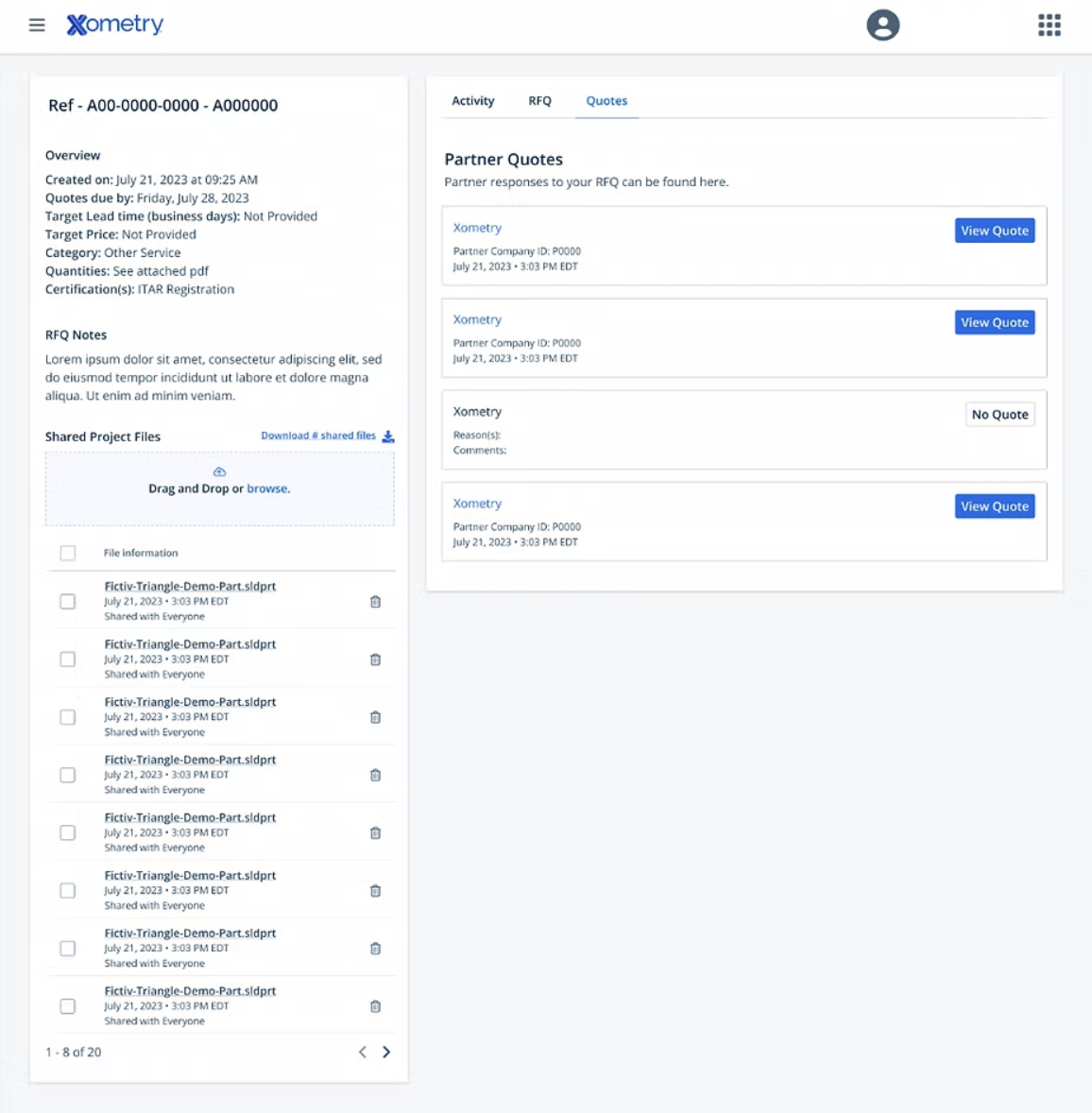
Overview Page

New Overview Page design

We worked on making the RFQ Overview page more organized with information on the left side and actionable items on the right side.

We also integrated information about the RFQ recipients from the backend repository to display on the overview page for users to be able to access directly.

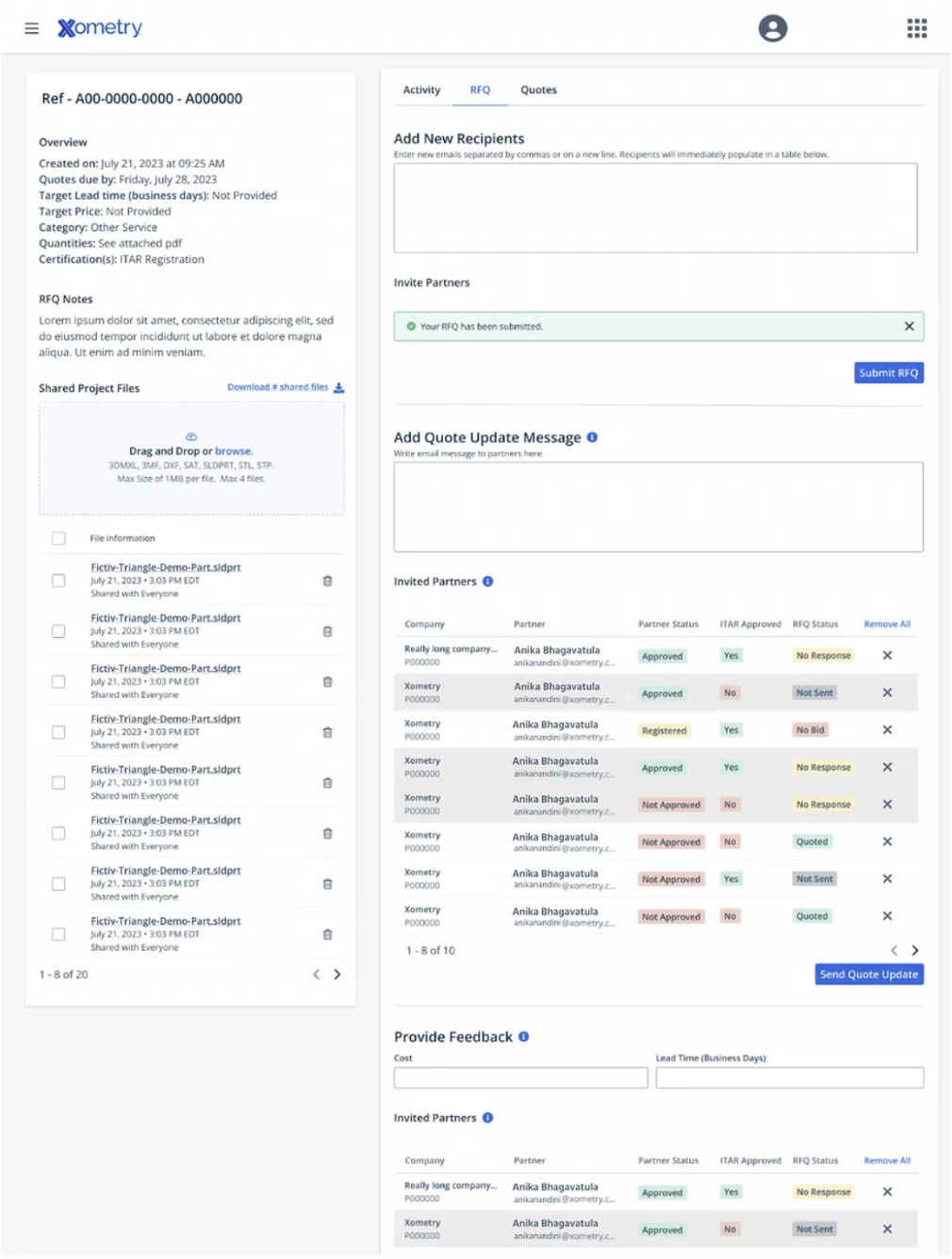
Partner Tables

We added color coding as well as feedback flags for statuses when new information was submitted.

Partner tables with color coding

Refactoring the Interface

Throughout this process, we converted the initial interface rendering from JavaScript to React.

Project Goals

We collaborated across teams to edit and refine the codebase as well as modify designs based on feasibility.

The refactoring process involved breaking down monolithic JavaScript components into reusable React components, implementing proper state management, and ensuring better code organization for maintainability and scalability.

Final Thoughts

Things I learned...

Working at Xometry as a frontend development intern taught me the importance of cross-team collaboration and communication.

I learned how to effectively translate design requirements into functional code. It gave me some amazing insight into the full product development lifecycle, from design to implementation, and how user experience considerations need to be balanced with technical constraints.

With more time...

I would have loved to dive deeper into the user research aspect of the RFQ process optimization.


With more time, I would have wanted to work with product designers toconduct more comprehensive usability testing with Xometry staff to evaluate the changes we made.


I would also explore more advanced React patterns and state management solutions to create an even more robust and scalable frontend architecture.

Overview
Problem
Process
Design
Refactoring
Reflection

view another project

Margin

A tool to help designers understand what their code is doing and how it works.

Frontend Development AI Interaction
×